
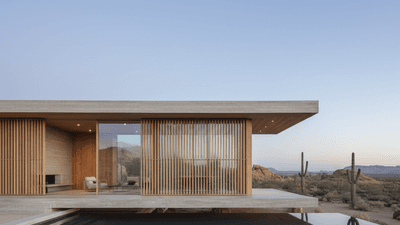



For decades, the American architectural vernacular of luxury was defined by a simple, unmistakable metric: more. More square footage, more imported marble, more ornate detailing, and more visual noise. But as we navigate the latter half of the 2020s, a profound paradigm shift is taking root across the United States. The era of the McMansion and the gilded penthouse is giving way to a new ethos where silence, space, and sensory well-being are the ultimate commodities. In today's market, true luxury is no longer about what you can add to a space; it is about what you have the confidence to strip away.
The Evolution of Excess to Essentialism
This transition from maximalism to mindful design isn't merely an aesthetic trend; it represents a fundamental change in how clients assign value to their environments. According to a recent exploration by ArchDaily on why having "less" has become the biggest trend in decor, contemporary luxury is now deeply intertwined with sustainability, the use of natural materials, and the promotion of psychological well-being.
Architects are increasingly tasked with designing spaces that act as sanctuaries from a hyper-connected, overstimulating world. The "New Luxury" relies on the integrity of the materials—think raw travertine, sustainably harvested white oak, and hand-troweled plaster—rather than applied ornamentation. It is a quiet luxury that whispers rather than shouts, demanding a much higher level of precision from architects and builders because there is no heavy trim or crown molding to hide imperfections.
| Attribute | Traditional Luxury | The "New" Luxury |
|---|---|---|
| Visual Focus | Ornamentation, symmetry, and overt displays of rare materials. | Negative space, natural light, and textural contrast. |
| Materiality | Highly polished, synthetic, or heavily processed finishes. | Raw, tactile, locally sourced, and patina-friendly materials. |
| Core Amenity | Excessive square footage and single-use specialty rooms. | Adaptable spaces, wellness integration, and acoustic privacy. |
| Lighting | Statement chandeliers and uniform, bright illumination. | Integrated, circadian-aligned, and experiential lighting. |
Experiential Design as the Ultimate Amenity
If physical clutter is out, what replaces it? The answer lies in experiential design. When we remove heavy furniture and oppressive architectural elements, we create a canvas for immersive experiences. Light, sound, and atmosphere become the primary building materials.
A prime example of this shift in the commercial hospitality sector is the recently completed Selva San Jose. Rather than relying on heavy, traditional bar decor, the designers opted for an immersive, atmospheric approach. Impact Lighting Inc. completed a spectacular fiber optic star ceiling at this luxury tequila bar in San Jose, California. By utilizing advanced lighting technology, the architects transformed a static ceiling into a dynamic, emotional experience.
"We are moving away from decorating a box, and instead, we are programming the atmosphere within it. The luxury is in the feeling the space evokes, not the objects it contains."
This approach perfectly encapsulates the "less is more" philosophy. A fiber optic ceiling requires minimal physical intrusion into the space—it doesn't consume square footage or block sightlines—yet it delivers an outsized emotional impact. For US architects, this highlights a critical strategy: integrating advanced, hidden technology to create atmospheric luxury without visual clutter.
Navigating the Regulatory Landscape for Mindful Design
Translating this minimalist, experiential ethos from concept to reality requires navigating the complex web of local zoning laws and architectural review boards. Interestingly, the shift toward understated luxury often aligns well with the goals of municipal planners, who frequently advocate for contextual harmony over ostentatious development.
Consider the proceedings of the Architectural Board of Review meeting on March 2, 2026. During this session, the board discussed and granted final approval for a project design at 624 East Haley Street. While the specific aesthetic details of every project vary, the overarching theme in modern review boards across the country is a demand for contextual sensitivity.
When architects pitch "New Luxury" designs—characterized by restrained facades, native landscaping, and sustainable material palettes—they often find a more receptive audience in design review boards. A building that prioritizes energy performance and subtle integration into the neighborhood fabric is far easier to get approved than a monolithic vanity project. However, the challenge lies in defending the "emptiness." Architects must be prepared to articulate to review boards how negative space and minimalist facades contribute positively to the urban streetscape, rather than appearing unfinished or overly austere.
Practical Implications for US Architecture Professionals
How can architecture and design professionals adapt their practices to capitalize on this shift toward essentialist luxury? The transition requires a retooling of both design strategies and client communication.
1. Master the Details of the Unseen
When you strip away trim and ornamentation, the junctions between materials become the focal point. A shadow gap between a wall and a floor must be executed flawlessly. Architects must work closer than ever with contractors to ensure precision framing and finishing, as minimalist design offers no margin for error.
2. Prioritize "Invisible" Technology
As seen with the Selva San Jose project, luxury clients want the benefits of high technology without the visual intrusion. Incorporate acoustic treatments seamlessly into plaster ceilings, hide HVAC linear diffusers in architectural reveals, and utilize tunable LED lighting that mimics natural circadian rhythms. The technology should be felt, not seen.
3. Redefine the Material Palette
Move away from materials that look flawless but feel synthetic. Embrace Wabi-Sabi principles by specifying materials that age gracefully and show the hand of the maker.
- Wood: Opt for oiled or soap-finished woods over high-gloss polyurethanes.
- Stone: Specify honed or leathered natural stone rather than highly polished slabs.
- Metals: Use living finishes like unlacquered brass or blackened steel that develop a unique patina over time.
4. Reframe the Client Conversation
Many clients still equate cost with visible complexity. It is the architect's job to educate them on the value of restraint. Frame the conversation around well-being, longevity, and peace of mind. Explain that investing in high-performance insulation, superior air filtration, and acoustic isolation is a deeper form of luxury than an imported crystal chandelier.
Looking Ahead: The Future of the American Sanctuary
The movement toward "having less" in luxury architecture is not a fleeting reaction to economic cycles; it is a profound maturation of American design sensibilities. As our external world becomes increasingly complex, noisy, and unpredictable, the value of a quiet, intentional, and beautifully restrained environment will only compound.
For architectural professionals, this represents an exciting mandate. We are no longer merely builders of shelters or assemblers of expensive materials; we are curators of atmosphere, well-being, and peace. By embracing essentialism, sustainable practices, and experiential design, we have the opportunity to redefine the American sanctuary for generations to come.