



The recent passing of Donlyn Lyndon at age 90 marks the end of a defining chapter in American architecture, yet his ethos feels more urgent today than ever. As a founding partner of MLTW and a visionary behind Northern California’s legendary Sea Ranch, Lyndon championed an architecture that bent to the will of the landscape rather than dominating it. In 2026, as the United States grapples with a housing crisis, climate volatility, and shifting demographics, the profession is being forced to ask a critical question: What does the American vernacular look like today?
The answer is emerging not from a single source, but from a confluence of new design competitions, a resurgence of critical regionalism, and a fundamental restructuring of how architects practice. From the search for the "Next House" to the rise of female-led design-build firms, the American architectural landscape is undergoing a profound evolution.
The Search for the Next Suburban Prototype
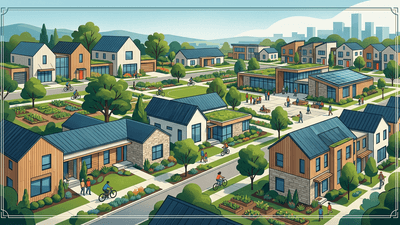
For decades, the American suburb has been defined by mass-produced, resource-intensive single-family homes that prioritize isolated square footage over ecological integration. However, a newly announced slate of architecture competitions is signaling a pivot. Among the most notable is the call for The Next House: USA, a competition challenging designers to envision a new suburban prototype for the United States.
This competition represents a vital opportunity for US firms. The prompt demands a departure from the mid-century Levittown model, asking instead for scalable, sustainable interventions that address modern realities—multi-generational living, remote work flexibility, and zero-carbon footprints.
- Density without disruption: Finding ways to introduce "missing middle" housing into traditionally single-family zoned neighborhoods.
- Material innovation: Utilizing mass timber, prefabricated components, and low-embodied-carbon materials to make the "Next House" economically viable.
- Climate resilience: Designing prototypes that can withstand regional extremes, from atmospheric rivers in California to prolonged heat domes in the Southwest.
Similarly, the call for proposals for the 2026 Seattle Design Festival highlights a growing emphasis on community-driven public spaces. The festival's focus underscores that the future of American architecture is not just about the private home, but the connective tissue of the public realm that surrounds it.
Critical Regionalism: From Sea Ranch to Terremoto
To understand where the American home is going, we must look at how it interacts with the land. Donlyn Lyndon’s legacy at Sea Ranch was built on the idea of "living lightly on the land." Today, that baton has been passed to a new generation of landscape architects who are pushing the boundaries of critical regionalism.
In a recent Landscape Architecture Month Q&A with the National Building Museum, the founders of the California-based landscape architecture office TERREMOTO discussed their approach to community-led land stewardship. TERREMOTO's work explicitly rejects the water-thirsty, heavily manicured lawns that have long defined the American dream.
"We are interested in a landscape architecture that is a truthful reflection of the ecology and culture of a place, rather than an imposition of an idealized aesthetic." — TERREMOTO
For architecture professionals, the rise of firms like TERREMOTO signifies a shift in project hierarchies. Landscape is no longer an afterthought or a decorative border applied post-construction; it is the generative force of the architecture itself. The "Next House" will not just sit on a plot of land; it will act as an active participant in local ecology, managing stormwater, fostering native biodiversity, and reducing urban heat island effects.
Celebrating Regional Excellence: The Texas Model
This commitment to regional specificity is not limited to the coasts. The recently announced 2026 Design Award winners from the Texas Society of Architects provide a masterclass in how localized design is solving macro-level problems. Recognizing 21 outstanding projects across the state, the awards highlight a distinct shift in priorities for the region.
Adaptive Reuse Over Ground-Up
A significant portion of the Texas awards honored adaptive reuse projects. In a state historically known for sprawling, ground-up development, the celebration of retrofits signals a maturing market. Architects are finding immense value—both cultural and carbon-related—in repurposing existing concrete and steel structures into vibrant community hubs and workspaces.
Elevating Affordable Housing
Furthermore, the inclusion of affordable housing projects among the top design winners proves that budget constraints do not preclude architectural excellence. The winning firms demonstrated that high-quality, regionally appropriate design—utilizing deep overhangs, passive cooling strategies, and robust local materials—is essential for equitable urban development.
Breaking Down Silos: The Rise of the Integrated Practice
As the demands on architecture become more complex—requiring intimate knowledge of sustainable materials, intricate supply chains, and localized labor markets—the traditional, siloed model of practice is showing its cracks. Enter the "trifecta powerhouse."
A recent profile of Lauren Howley, founder of Howley Design Build in Los Angeles, illustrates the future of architectural practice. Howley operates seamlessly as a contractor, architect, and designer. Navigating the historically male-dominated construction industry, she is part of a growing community of female contractors and integrated practitioners who are taking total ownership of the built environment.
For US architecture firms, Howley’s model is highly instructive. The friction between design intent and construction reality is a primary driver of cost overruns and compromised sustainability goals. By bringing construction management in-house, or forming deeply integrated partnerships with contractors from day one, architects can ensure that the ambitious goals of projects like "The Next House: USA" are actually realized in the field.
| Practice Element | Traditional Architectural Model | The 2026 Integrated Model (The "Howley" Approach) |
|---|---|---|
| Project Delivery | Design-Bid-Build (Siloed phases) | Design-Build (Continuous collaboration) |
| Risk Management | Transferred to Contractor via RFI/Change Orders | Shared risk; real-time cost and constructability feedback |
| Ecological Integration | Landscape designed post-architecture | Landscape and architecture co-developed from site analysis |
| Material Sourcing | Specified by architect, sourced by GC | Direct relationships with local fabricators and trades |
Conclusion: Building the Next Legacy
Donlyn Lyndon once noted that architecture should “pay attention to the rhythms of the place.” As we look across the spectrum of American architecture in 2026—from the theoretical prompts of new design competitions to the tangible successes of the Texas Design Awards and the integrated practice of Lauren Howley—it is clear that the industry is learning to listen to those rhythms once again.
The "Next House: USA" will not be a singular aesthetic exported across the country. It will be a methodology. It will be built by integrated teams who understand constructability as well as they understand spatial theory. It will be rooted in the critical regionalism championed by firms like TERREMOTO, and it will honor the legacy of pioneers like Lyndon by proving that our greatest architectural achievements are those that belong unmistakably to the land they sit upon.